From Daydream to Doorstep: Inside the Creative Mind Behind Rachel The Hat

Photo: milliner designer sketching hat designs in creative studio with fabric swatches, via upload.wikimedia.org
There's a moment — and every creative person knows it — when an idea arrives uninvited and refuses to leave. Maybe it's the dusty coral of a late-summer sunset over the Midwest. Maybe it's the texture of an antique ribbon spotted at a flea market in Nashville. For Rachel, that moment is the beginning of everything.
Handcrafted millinery isn't a process you can rush, and it's not one that starts at a worktable. It starts somewhere far messier and far more human: in the imagination.
Where Inspiration Actually Comes From
Forget the myth of the tortured artist staring at a blank canvas. Rachel's inspiration tends to arrive sideways — through everyday life rather than formal research sessions. A road trip through the Southwest might yield an entire palette: terracotta, sage, sun-bleached bone. A trip to a local botanical garden in spring could spark an entire line built around structural flower forms.
Seasonal shifts play a huge role too. American seasons carry their own visual language, and Rachel leans into that hard. Fall isn't just pumpkin spice — it's the deep burgundy of turning leaves, the weight of heavier wool, the urge to layer and nest. Summer is wide brims and breathable weaves. Each season essentially writes its own creative brief, and Rachel listens.
Cultural moments matter as well. A resurgence of old Hollywood glamour on the red carpet, a viral moment at the Kentucky Derby, or even a period drama everyone's been watching on streaming — these things ripple outward into fashion consciousness, and a good milliner catches those ripples early.
Sketching It Out: The Messy Middle
Once an idea has enough shape to be sketched, the real work begins — and it is genuinely messy. The studio at Rachel The Hat is not a pristine white space. It's a working environment: fabric swatches pinned to boards, half-finished brims on wooden blocks, thread in seventeen shades of the same color because the exact right one matters.
Sketching is less about producing a finished technical drawing and more about having a conversation with the idea. A sketch might go through a dozen iterations before the silhouette feels right. The crown height shifts. The brim gets wider, then narrower, then wider again. Embellishments get added and removed. This phase is where a lot of ideas get edited down to their most essential form — and occasionally, where they get scrapped entirely.
That editing process is actually one of the most important parts. Not every inspired idea becomes a hat. Some concepts are beautiful in theory but don't translate well into wearable form. A design that looks striking on paper might sit awkwardly on an actual human head, or require materials that don't behave the way the sketch implies. Learning to let go of a concept that isn't working is its own skill.
Choosing Materials: More Than Just Fabric
Once a design has cleared the sketch phase, the material sourcing begins — and this is where handcrafted millinery gets genuinely exciting. Rachel sources from a mix of domestic suppliers and specialty vendors, always with an eye toward quality and character. Not all felt is created equal. Wool felt has a warmth and structure that synthetic versions simply can't replicate. Sinamay, a natural fiber woven from abaca, has a breathability and drape that makes it ideal for warmer-weather designs.
Color selection at this stage is almost meditative. Rachel will often sit with fabric samples for days before committing, holding them up in different light, pairing them with potential trim options, imagining them against different skin tones. The goal is always a color that feels both intentional and a little unexpected — something that makes you look twice.
Trims, ribbons, feathers, and handmade flowers are sourced with the same level of care. A perfectly constructed hat can be undermined by cheap embellishment, and Rachel knows it. Every detail is considered.
The Build: Where the Magic Actually Happens
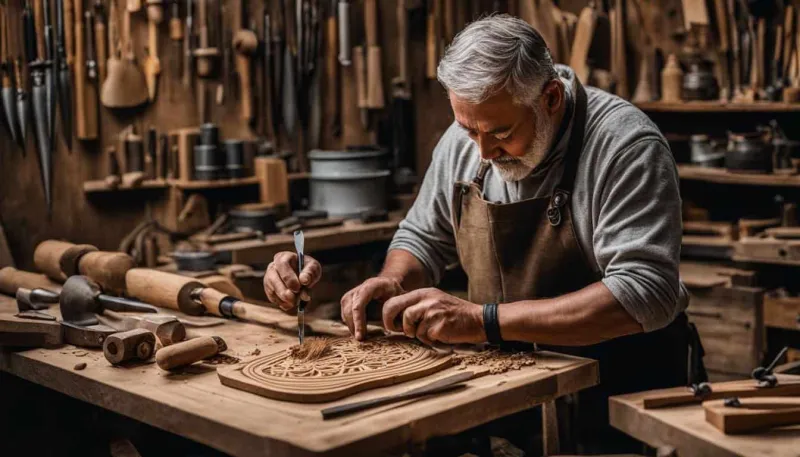
Blocking is the foundation of millinery construction, and it's one of those techniques that looks deceptively simple until you try it yourself. Fabric is steamed and stretched over a wooden block — a form shaped like the crown of a hat — and pinned into place while it dries. The material takes on the shape of the block, which is how those clean, precise curves get made.
From there, the brim is shaped and attached, the structure is reinforced, and the interior is finished with a sweatband and lining. Every single step is done by hand. There are no shortcuts in this process, and honestly, that's the whole point. The time it takes is what makes the hat what it is.
This is also the stage where small, unexpected decisions happen — the ones that make each piece feel singular. The way a ribbon is knotted rather than tied flat. The slight asymmetry of a hand-stitched flower. These aren't accidents; they're the mark of a human hand, and they're what separates a handcrafted hat from anything you'd find mass-produced.
From Studio to You
When a finished hat is photographed, listed, and shipped out to a customer somewhere in the US, that's not the end of the story — it's the beginning of a new chapter. Rachel thinks about who's going to wear each piece, even if she doesn't know them yet. Will it be worn to a wedding in Charleston? A summer concert in Portland? A Sunday brunch in Chicago?
That's the part of this work that never gets old: knowing that something made entirely by hand, from an idea that started as a color or a feeling or a fleeting image, is going to become part of someone else's story. Someone is going to put that hat on and feel a certain way. Maybe bold. Maybe elegant. Maybe like the most interesting person in the room.
That's the whole point of handcrafted millinery. It's not just a hat. It's a daydream that made it all the way to your doorstep.