Straw, Wire, and Rebellion: Why Gen Z Is Ditching Fast Fashion for Handmade Hats
Photo: Édouard Vuillard, Public domain, via Wikimedia Commons
Something is shifting in the way young Americans think about what they put on their heads — and honestly, it's one of the most exciting things happening in fashion right now.
Walk through any vintage market in Brooklyn, Austin, or Portland on a Saturday morning and you'll spot them: women in their early twenties, turning handblocked felt hats over in their hands, asking about the brim wire, inspecting the ribbon trim. They're not buying for a costume or a themed party. They're buying because they want something real.
This is the millinery renaissance, and Gen Z is driving it.
The Backlash Nobody Saw Coming
For the better part of two decades, fast fashion ruled. Cheap, trend-chasing, disposable — the model worked because it gave people access to runway looks at bargain prices. But the cracks have been showing for a while now. Environmental reporting on textile waste, viral TikToks about garment worker conditions, the rise of thrifting as a cultural identity — all of it has been building toward a generation that is genuinely skeptical of the "buy it cheap, toss it next season" cycle.
Accessories, historically, have been an afterthought in these conversations. We talk a lot about fast fashion in terms of dresses and denim, but hats? Hats have quietly become one of the most telling categories in the whole debate.
A machine-made, synthetic-fiber hat from a big-box retailer might cost $18 and last one season. A handcrafted wool felt hat, blocked by hand, stitched with care, and finished with quality trim? That hat might cost significantly more upfront — but it can last decades. And increasingly, that math is making sense to younger shoppers.
"I used to buy three or four cheap hats a year," says Maya, a 24-year-old graphic designer from Chicago. "They'd get misshapen, the brims would warp, and I'd just throw them out. When I finally invested in a handmade hat, I realized I'd basically been spending the same amount of money — just with nothing to show for it."
What "Handmade" Actually Means
There's a lot of noise around words like "artisan" and "handcrafted" in today's marketplace. It's worth being specific about what traditional millinery actually involves, because it's genuinely labor-intensive in a way that most people don't realize.
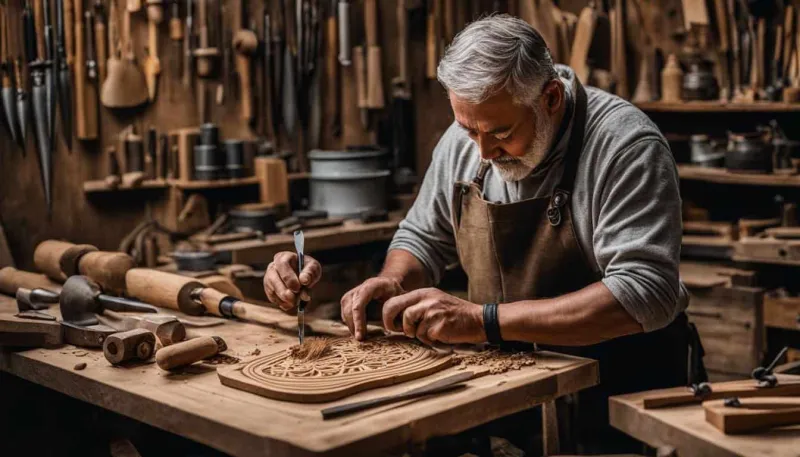
Blocking a hat means stretching dampened felt or straw over a wooden block — a form that gives the hat its shape — and letting it dry under tension. The brim is wired by hand. The crown is stitched. Trims are sourced, cut, and applied with intention. Every step requires skill that takes years to develop. There are no shortcuts that don't show up eventually.
This is the kind of work that happens at studios like Rachel The Hat, where each piece is a considered creation rather than a product rolling off an assembly line. The difference isn't just aesthetic. It's structural. A well-made hat holds its shape through weather, travel, and real life in a way that a machine-pressed hat simply cannot.
For Gen Z consumers who grew up watching fast fashion literally fall apart after a few washes, this durability reads as radical.
The Vintage Technique Revival
What's particularly fascinating about this moment is that the techniques Gen Z is gravitating toward aren't new. Wet-blocking, hand-stitching, wire-briming — these are methods that go back generations. American milliners in the early twentieth century built entire industries around this craft. Then mass production arrived, and much of that knowledge went underground.
Now it's coming back, carried forward by a small but passionate community of makers and fueled by younger customers who are hungry for authenticity.
"I think people are tired of things that look handmade but aren't," says Jordan, a 27-year-old teacher from Nashville who recently bought her first custom hat. "There's something about knowing that an actual human being spent real time making something for you. It changes how you wear it. You take care of it differently."
That relationship with an object — caring for it, repairing it, wearing it for years — is almost countercultural right now. And Gen Z, a generation that grew up with infinite digital abundance, seems to be craving exactly that kind of tangible, lasting connection.
Sustainability as a Style Statement
It would be easy to frame this purely as an environmental conversation, but that would miss something important. For a lot of young consumers, choosing handcrafted millinery isn't just about reducing waste — it's about personal expression.
A hat made by an independent milliner is, by definition, not something everyone else is wearing. In a world where algorithm-driven fashion means everyone's feed serves up the same trending pieces, owning something genuinely unique carries real cultural weight.
"I want to wear things that feel like me, not like a trend report," says Aaliyah, a 22-year-old from Atlanta who discovered independent millinery through Instagram. "A handmade hat tells a story. It has a maker. That matters to me."
This is where sustainability and personal style intersect in the most compelling way. Choosing slow fashion isn't a sacrifice for these shoppers — it's an upgrade. Quality over quantity, character over conformity, longevity over novelty.
What This Means for the Future of Millinery
The millinery industry in America has been a small but resilient world for decades. Independent makers have kept the craft alive through periods when hats fell out of mainstream fashion entirely. What's happening now feels different — not just a niche revival, but a genuine cultural reorientation.
More young people are learning to block hats. More customers are seeking out makers directly, asking questions about materials and process. More wardrobes are being built around one great hat rather than ten forgettable ones.
At Rachel The Hat, we've always believed that a handcrafted hat is one of the most personal things you can own. It sits at the intersection of function and art, craft and identity. Watching a new generation discover that for themselves — and choose it deliberately, eyes open — is genuinely exciting.
The rebellion is quiet, but it's real. And it's wearing a really beautiful hat.