Stitched Back Into Style: The Quiet American Millinery Revival You Need to Know About
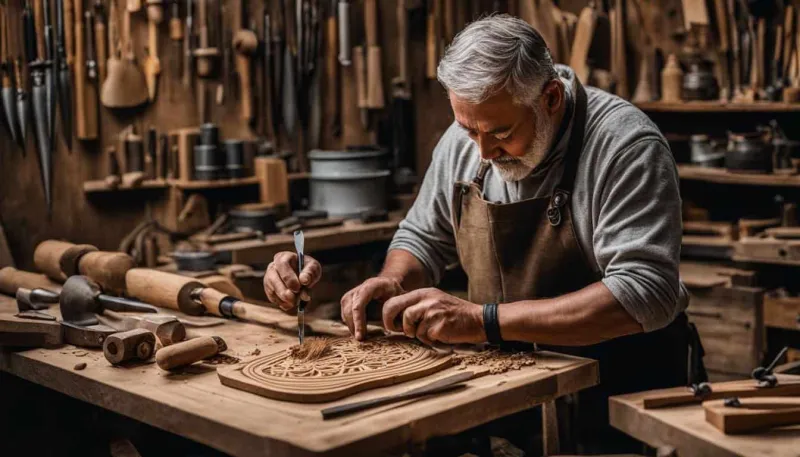
Photo: artisan milliner hand blocking hat in small studio workshop, via placeofmytaste.com
There's a particular kind of magic that happens when someone places a handblocked hat on their head for the first time. It's not just the fit — it's the weight of it, the way it shifts your posture, the subtle message it sends to everyone in the room. That feeling is ancient, really. Hat-making has been woven into American culture since the colonial era, and for most of that history, it was treated as serious craft — the kind passed down through generations, refined over decades, celebrated in every city from New York to New Orleans.
Then came the mid-twentieth century, and the hat slowly disappeared from everyday American life. Mass production took over. Department store shelves filled with identical, machine-stamped shapes. The artisan milliner — the person who blocked felt over wooden forms, hand-stitched ribbon trim, and shaped brims with steam and patience — became something of a rarity.
But here's the thing about craft: it doesn't die. It waits.
And right now, American millinery is doing something remarkable. It's coming back — not as nostalgia, not as costume, but as a living, breathing, commercially viable craft that's attracting a new wave of makers, wearers, and collectors who are hungry for something real.
Why Millinery Fell Off — and Why That's Changing
To understand the revival, it helps to understand the decline. When President Kennedy famously went hatless at his 1961 inauguration, cultural historians often point to that moment as a symbolic turning point. Whether or not JFK actually killed the hat industry (the real causes were more complex — suburban car culture, shifting workplace norms, the rise of casual dress), the effect was real. By the 1970s, wearing a hat felt formal in a world that was rapidly shedding formality.
For decades, the craft infrastructure around millinery quietly eroded. Suppliers shuttered. Schools stopped offering dedicated programs. The knowledge that had once moved fluidly from master to apprentice started to pool in fewer and fewer hands.
What changed? A few things converged at once.
The slow-fashion movement gave people a new framework for thinking about what they wear and where it comes from. Social media gave independent makers a direct line to customers who'd never set foot in a boutique. And a broader cultural exhaustion with disposable, mass-produced everything created an opening for objects that tell a story — objects made by hand, with intention, by someone whose name you actually know.
Enter the contemporary American milliner.
The New Makers: Who's Leading the Charge
Across the country, a diverse group of makers is reclaiming millinery as a serious artistic and commercial pursuit. They're working out of converted garages in Portland, studio apartments in Brooklyn, and dedicated workshops in cities like Chicago, Nashville, and Austin. They're sourcing vintage wool felt from specialty importers, hunting down the right grosgrain ribbon at textile markets, and sharing their process in real time with audiences who can't get enough of it.
What's striking about this generation of milliners is that many of them came to the craft sideways. Some trained as fashion designers. Others are self-taught, cobbling together knowledge from old textbooks, YouTube tutorials, and — increasingly — from workshops and short courses offered by established makers who are consciously working to pass the craft forward.
Here at Rachel The Hat, that sense of intentional transmission is central to everything. The techniques behind each piece — the blocking, the steaming, the careful hand-stitching — aren't just production methods. They're a living archive. Every hat carries the fingerprints of a tradition that's been adapted, not abandoned.
Apprenticeship and Education: Rebuilding the Pipeline
One of the most encouraging signs of millinery's revival is the slow but steady rebuilding of its educational infrastructure. For years, aspiring milliners had limited options: expensive fashion school programs that touched on headwear only briefly, or the near-impossible task of finding a working milliner willing to take on a student.
That's shifting. Small-batch workshops — weekend intensives, multi-week courses, and online learning series — have filled some of the gap. Organizations like the Millinery Arts Alliance have worked to create community and share resources among practitioners. Some established milliners now offer formal apprenticeship arrangements, where students work alongside a maker for an extended period, learning not just technique but the full shape of a creative business: sourcing, pricing, client relationships, the whole thing.
This matters enormously. Craft knowledge is embodied knowledge — it lives in the hands as much as the mind. You can watch someone block a hat a hundred times on video, but there's no substitute for standing at the same worktable, feeling the resistance of wet felt under your palms, learning to read the material by touch. Rebuilding those mentorship pathways is how millinery goes from a revival to a genuine renaissance.
The Business of Handmade Hats in 2024
Let's be honest about something: building a sustainable business around handcrafted millinery is not easy. It requires pricing work honestly — which means charging rates that reflect real hours, real materials, and real expertise — in a market that has been trained by fast fashion to expect everything cheap and fast.
But makers who are doing this well have found a receptive audience. Customers who seek out handmade hats are, almost by definition, not the bargain-hunting crowd. They're people who've made a conscious decision to invest in something lasting, something singular. They want to know who made it, how it was made, and what makes it different from the hat hanging on a rack at a chain retailer.
Direct-to-consumer models — whether through an e-commerce site, a studio's social presence, or local markets and pop-ups — have been transformative for independent milliners. The ability to build a genuine relationship with customers, tell the story behind each piece, and cultivate a community of people who get it has made it possible to run a small millinery business on terms that would have been nearly impossible through traditional wholesale channels.
Custom commissions are also a significant part of the picture. A hat made specifically for one person — for a wedding, a milestone birthday, a Kentucky Derby party, or simply because someone finally decided to invest in a piece they'd wear for decades — carries a value that no mass-produced product can touch.
What This Revival Means for American Style
Beyond the business and the craft, there's a cultural story here worth paying attention to. The resurgence of millinery is part of a larger renegotiation of what Americans value in what they wear. It's a pushback against the idea that clothing is disposable, that accessories are interchangeable, that personal style is just a matter of grabbing whatever's trending this season.
A handmade hat is a statement — not a loud one, necessarily, but a definite one. It says: I thought about this. I chose this. This is mine.
That kind of intentionality is contagious. When one person in a room is wearing something genuinely handcrafted, it has a way of making everyone else think a little differently about what they're wearing. It opens up conversations. It invites curiosity.
The milliners leading this revival — the makers working in small studios, teaching workshops, building their businesses one custom piece at a time — are doing more than keeping a craft alive. They're quietly reshaping what American style looks like, one extraordinary hat at a time.
And honestly? It's about time.