From the Feed to Your Head: How Social Media Turned Hats Into the Internet's Favorite Accessory
The Hat Heard 'Round the Internet
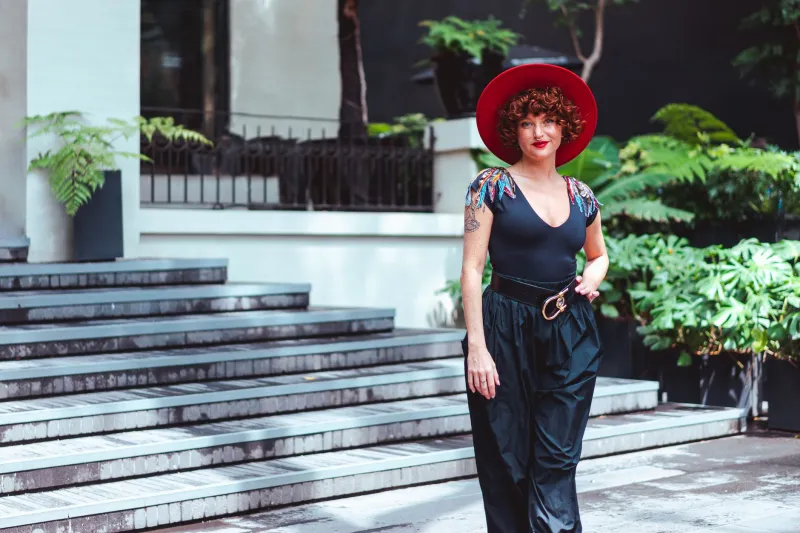
Somewhere between a thrift store haul video and a "get ready with me" reel, something quietly shifted. Hats — the kind with actual presence, actual personality, actual craft behind them — started showing up everywhere online. Not baseball caps. Not beanies. We're talking wide brims, sculptural crowns, vintage-inspired cloches, and hand-blocked felt pieces that stop a scroll cold.
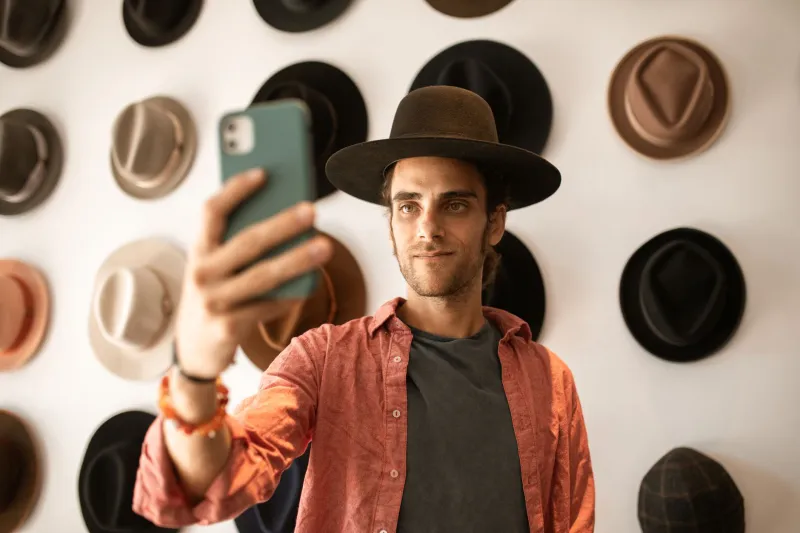
If you've been on TikTok or Instagram in the last two years, you've felt it. Hat content performs. And not in the "here's a boring product shot" way — in the "I need to know where she got that immediately" way that sends search bars into overdrive.
So what's actually going on here? And more importantly, what does it mean for the way you get dressed?
Why Hats Are Built for the Visual Internet
Let's be honest: the internet is a visual place, and hats are one of the most visually distinct things a person can wear. They frame the face. They add height, drama, and silhouette. They photograph beautifully from almost every angle. In a world where your personal aesthetic is essentially your calling card, a great hat does more work per square inch than almost any other accessory.
Fashion creators figured this out fast. A simple outfit — jeans, a white tee, clean sneakers — becomes a whole moment the second a sculptural wide-brim lands on top. The hat becomes the hook. The thing that makes someone pause mid-scroll and ask, "Wait, who is she?"
That's not an accident. It's visual grammar. And millinery, especially handcrafted millinery, speaks it fluently.
The Viral Moments That Changed Everything
A few specific hat moments really accelerated this. Think back to the Kentucky Derby aesthetic going fully mainstream on TikTok — suddenly fascinator tutorials and statement brim inspo were racking up millions of views from people who'd never set foot near a racetrack. Then came the broader "old money" and "quiet luxury" waves, which brought structured wool hats and classic felt fedoras back into serious style conversation.
But the real turning point? The rise of the "weird girl aesthetic" and its embrace of maximalist, one-of-a-kind dressing. Gen Z creators who built followings by refusing to look like everyone else started gravitating toward hats as a symbol of that refusal. A hand-blocked bucket hat. A custom fascinator worn to brunch. A beret that doesn't look like every other beret at the mall. These pieces became markers of intentionality — proof that the wearer had thought about what they put on their head.
And that intentionality reads on camera. It reads in a thumbnail. It builds a personal brand in a way that a mass-produced accessory simply can't.
Handmade Cuts Through the Noise Differently
Here's where things get interesting from a millinery perspective. The internet is flooded with fast-fashion hat content — $12 wide brims that look fine in a photo and fall apart by the third wear. Algorithms push that stuff constantly because it's cheap, it's clickable, and brands can afford to run ads for it.
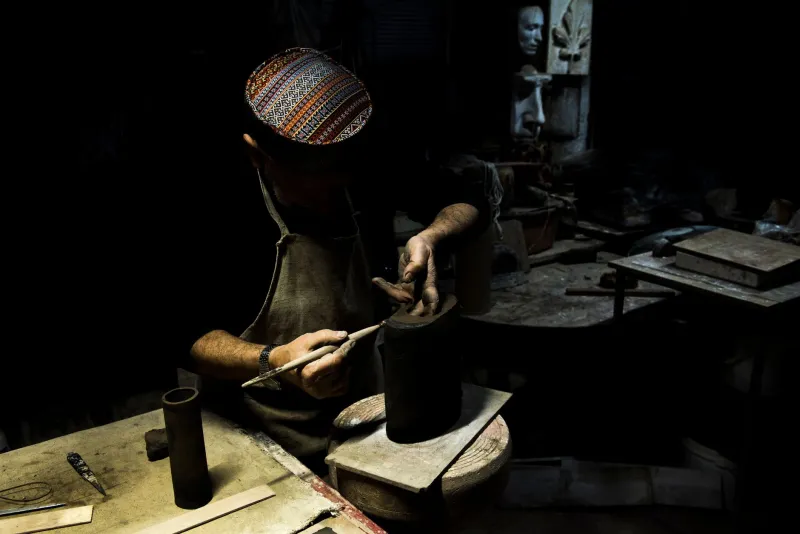
But handmade pieces? They carry something different. There's a story there. The way a hat was blocked by hand, the hours spent shaping a brim just so, the choice of materials — all of that comes through, especially in video. Creators who wear handcrafted millinery get asked about it constantly in their comments. "Where is this from?" "Is this vintage?" "Did someone make this for you?"
That's not just engagement. That's a conversation. And conversations are what actually build communities online.
For independent milliners, this is a genuine shift. The same platforms that once felt dominated by big-box fashion are now creating organic space for small, handcraft-forward makers to find exactly the audience that's been looking for them. Someone in Ohio discovers a hat maker in Brooklyn through a TikTok stitch. A customer in Texas finds a piece that feels like it was made for her through a single Instagram story. The internet, for all its chaos, is genuinely good at connecting the right hat to the right head.
Building Your Personal Brand, One Brim at a Time
So what does this mean for you, practically speaking? If you're someone who cares about how you show up — whether that's in real life, online, or both — here are a few ways to think about millinery as a personal brand tool.
Lead with the unexpected. A hat is an immediate signal that you're not just going through the motions. Even a simple, well-made hat communicates that you made a choice. Online, that reads as confidence. In person, it reads the same way.
Invest in pieces with stories. Fast-fashion hats are forgettable — by design. A handmade piece has provenance. It has a maker. It has a process. When you talk about your clothes online (or just to the person next to you at a party), a hat with a story gives you something real to say.
Don't overthink the "occasion" thing. One of the biggest mental blocks people have around statement millinery is the idea that it requires a special event. It doesn't. Some of the most powerful hat content online is just someone wearing a great hat to run errands, grab coffee, or walk their dog. Normalizing the hat is part of the whole point.
Mix textures and eras. The looks that go viral aren't usually head-to-toe coordinated. They're interesting because something is slightly unexpected — a structured felt hat with a slip dress, a wide-brim straw piece with a blazer. Contrast is visually compelling, and millinery is one of the easiest ways to introduce it.
The Bigger Picture
What's happening with hats on social media isn't really about hats. It's about a generation of people who are tired of looking like a catalog page and are actively seeking out ways to look like themselves. Hats — especially handcrafted ones — have become shorthand for that. They signal creativity, confidence, and a willingness to take up space in a way that a plain outfit simply can't.
For those of us who've always believed that what you put on your head matters, this moment feels earned. The internet took a while to catch up, but it got there.
And honestly? The hats were always ready.