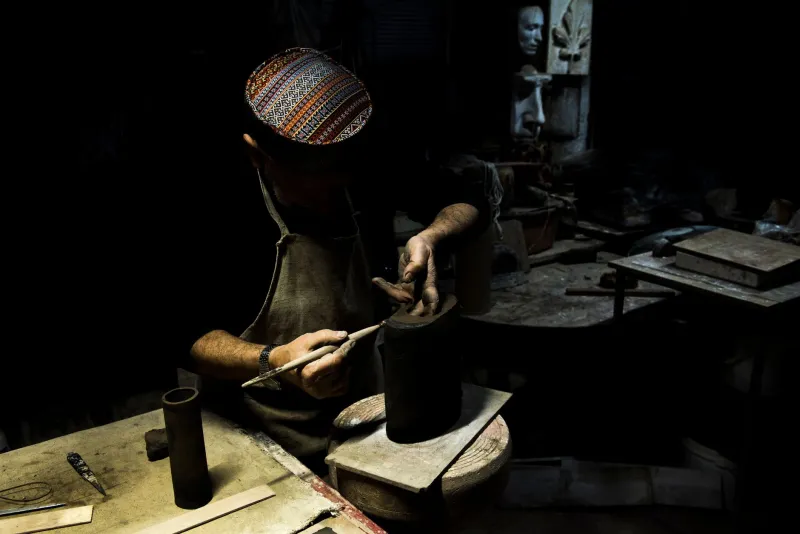
When the Needle Became My Therapist: How Hat-Making Pulled Me Back From the Edge of Burnout
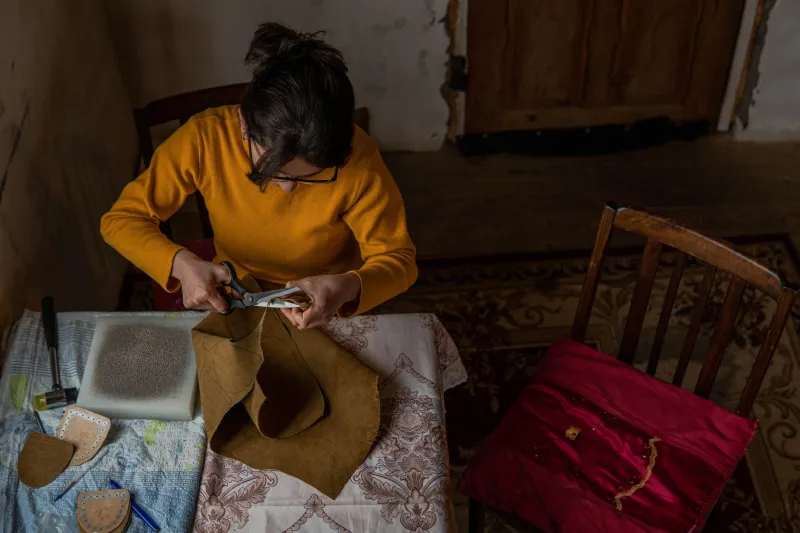
I want to tell you about a Tuesday afternoon a few years back when I sat on my kitchen floor, back against the cabinet, laptop closed, and just... couldn't. Couldn't answer one more email. Couldn't scroll through one more feed. Couldn't manufacture one more version of enthusiasm for a world that felt like it was moving at a frequency I was no longer tuned into.
I wasn't broken, exactly. But I was fraying at the edges in a way that felt familiar to a lot of people I've talked to since. The particular cocktail of digital overload, a job that asked everything of me, and the ambient noise of modern American life had quietly drained something I didn't even know I needed to protect.
What got me off that kitchen floor? A half-finished hat on my worktable.
The Noise Stops When Your Hands Start Moving
I'd been dabbling in millinery for a little while at that point — picking it up the way a lot of us stumble into crafts, out of curiosity more than conviction. But that afternoon, something shifted. I sat down at the table, picked up the sinamay base I'd been shaping, and just... started working.
And the noise stopped.
Not the literal noise — my neighbor's dog was still at it, the street outside was still doing its thing. But the internal noise, that relentless ticker tape of tasks and anxieties and half-formed worries? It went quiet in a way I hadn't experienced in months.
There's actual science behind this, it turns out. Repetitive, hands-on creative work activates what researchers sometimes call a "flow state" — a condition of absorbed focus where the brain's default mode network (the part responsible for rumination and self-referential thinking) quiets down. Knitters talk about it. Potters talk about it. Woodworkers swear by it. For me, it happened over a hat block and a length of wire.
Why Millinery, Specifically
I've tried other things. Journaling, meditation apps, the whole wellness toolkit that gets recommended in every productivity blog in America. Some of it helped. But millinery hit differently, and I've thought a lot about why.
Part of it is the tactile specificity of the craft. You're not just moving your hands — you're negotiating with materials that have opinions. Straw wants to go one way. Wire needs coaxing. Felt has a memory you have to work with, not against. There's a constant, low-level problem-solving happening that keeps your brain engaged without overwhelming it. It's the cognitive sweet spot: demanding enough to hold your attention, grounded enough to feel manageable.
Part of it is also the pace. Millinery is slow by nature. You can't rush a blocked hat. You can't microwave the drying time on a shaped brim. In a culture that rewards speed above almost everything else, there's something genuinely countercultural about a process that refuses to be hurried. I started to find that refusal kind of beautiful.
And honestly? Part of it is that you end up with a hat. A real, physical, wearable thing that didn't exist before you sat down. In a workday full of emails that vanish into inboxes and tasks that regenerate overnight, making something you can hold in your hands and put on your head carries a particular kind of satisfaction that's hard to replicate.
You Don't Have to Become a Milliner to Get the Benefit
Here's what I want to be clear about: I'm not suggesting everyone needs to quit their job and start a hat business. That's my story, and it unfolded slowly and with plenty of uncertainty along the way.
What I am suggesting is that the underlying principle — using intentional, hands-on creative work as a counterweight to digital and emotional overwhelm — is accessible to almost anyone.
If you're curious about millinery, start small. A simple fascinator base. A ribbon-trimmed cloche from a kit. There are beginner resources online, and the barrier to entry is lower than most people assume. You don't need a studio or a ton of equipment to get started — just a worktable, some basic materials, and permission to make something imperfect.
If hats aren't your thing, the principle still holds. The research on craft-based stress relief consistently points to a few key ingredients: physical engagement with materials, a task with clear (if modest) goals, and enough creative latitude to feel like you made the decisions. Embroidery, bookbinding, leatherwork, candle-making — the specific medium matters less than the quality of attention it requires.
Building a Practice, Not Just a Hobby
One thing I've learned is that the benefits of creative craft don't accumulate from occasional bursts of activity. They build through consistency — through showing up at the worktable even when you're tired, even when the project isn't going well, even when part of you would rather just turn on Netflix.
I try to protect a few hours a week that are genuinely mine. No phone on the table. No background podcast. Just the materials, the work, and whatever my brain decides to do when it isn't being pulled in seventeen directions. Some sessions are productive in a traditional sense — I finish something, I solve a construction problem I've been wrestling with. Others are quieter. I pull apart something that wasn't working and start again. I experiment with a new trim technique and abandon it halfway through.
All of it counts. All of it does something for me that no app, no supplement, and no self-optimization system has managed to replicate.
The Hat as a Form of Self-Care
I know "self-care" has become a loaded term — commercialized, sometimes trivialized, often used to sell bath products to exhausted people who need structural change more than they need a face mask. I use it here carefully.
What I mean by it, in the context of millinery, is this: the deliberate choice to spend time doing something that restores you, that asks something of your hands and your attention but not your performance, that produces something beautiful without requiring you to be anything other than present and patient.
Every hat I make carries some version of that afternoon on the kitchen floor. The moment I stopped running and started making. I wear that in every piece that leaves this studio, and I think — I hope — you can feel it when you hold one.
If you're fraying at the edges too, I'd gently suggest: find your hat. Find the thing that makes the noise stop. It might be millinery. It might be something else entirely. But it's worth looking for, and it's worth protecting once you find it.
The needle will be here when you're ready.